Sour Cream Onion Skillet Bread
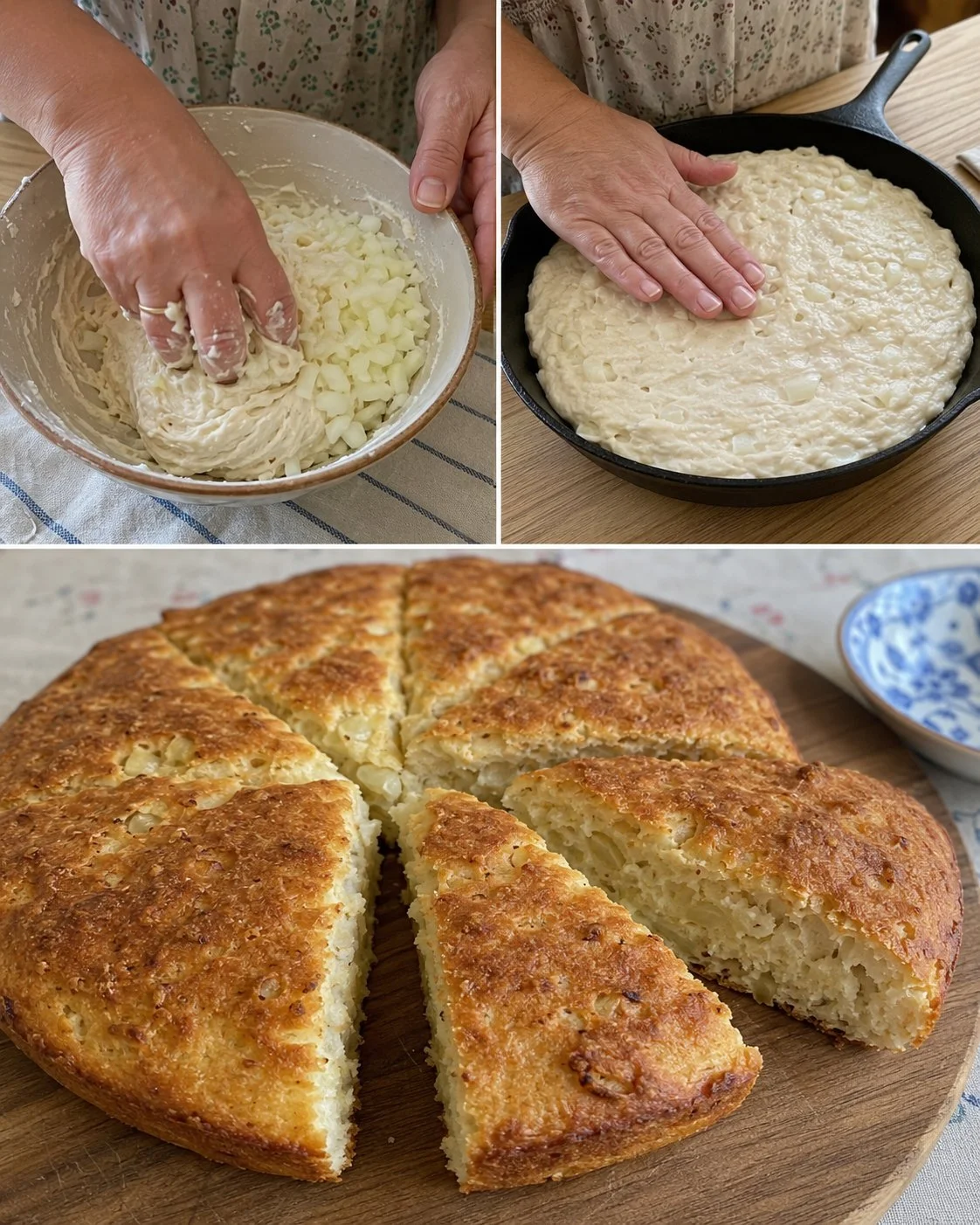
Have you ever wanted a quick bread that feels homemade but doesn’t require yeast or long rising times? This skillet bread is exactly that—an easy, comforting loaf that comes together in less than 30 minutes. It’s wonderfully soft, with a tender crumb thanks to the sour cream, and the onions add just the right hint of sweetness and savory depth. Cooking it right in the skillet means you get a crisp, golden crust on both sides without heating up the oven.
One thing I learned is to cook the onions gently until they’re soft but not browned. This keeps their flavor mellow and avoids any bitterness. Also, using a lid while cooking helps the bread cook through evenly without burning the crust. It’s a simple recipe, but these small steps make all the difference between a dense, doughy bread and one that feels light and satisfying.
Why You’ll Love This Recipe
- Uses simple pantry ingredients you probably already have on hand.
- No yeast or complicated steps—just a quick mix, a little skillet cooking, and you’re done.
- Moist and tender crumb from sour cream, with a flavorful touch of caramelized onions.
- Skillet cooking gives a crisp-edged bread without heating the whole oven.
- Great for beginners or anyone short on time but craving fresh bread.
- Cooking with a lid ensures even cooking, preventing the bread from staying raw inside.
Ingredients
- 2 cups (250 g) all-purpose flour
- 2 teaspoons (8 g) baking powder
- ½ teaspoon (3 g) salt
- 1 small onion (about ½ cup/75 g), finely chopped
- 1 cup (240 ml) sour cream
- 2 tablespoons (30 ml) oil, plus extra for cooking
Ingredient Notes
Flour: All-purpose flour works best here for a soft texture. You could swap half for whole wheat if you want a nuttier taste, but it will be denser.
Sour Cream: This adds moisture and tenderness. If you don’t have sour cream, plain Greek yogurt is a good substitute, though the flavor will be slightly different.
Onion: Use a small white or yellow onion finely chopped. Cooking the onion slowly in oil softens the flavor and makes the bread more fragrant without sharpness.
Baking Powder: This is essential to give the bread rise since there’s no yeast.
Kitchen Tools Needed
- Large mixing bowl
- Sharp knife and chopping board
- Non-stick or cast-iron skillet (about 8 or 9 inches / 20–23 cm diameter)
- Lid to cover the skillet (any tight-fitting lid or even a large plate works)
- Spatula or sturdy spoon
- Measuring cups and spoons
Step-by-Step Instructions
-
Cook the Onion: Heat 1 tablespoon (15 ml) of oil in the skillet over medium-low heat. Add the finely chopped onion and cook, stirring occasionally, until soft and translucent—about 5 to 7 minutes. Avoid browning or crisping the onion. Remove from the skillet and let cool slightly.
-
Mix Dry Ingredients: In a large bowl, whisk together the flour, baking powder, and salt evenly.
-
Make the Dough: Stir the cooked onions and the sour cream into the dry ingredients. Mix with a spoon until everything just comes together into a thick, slightly sticky dough. It should be firm but not dry; if it feels too dry, add a teaspoon of water or sour cream to loosen it.
-
Prepare the Skillet: Wipe out the skillet to remove any onion bits, then add the remaining 1 tablespoon (15 ml) of oil and heat over medium-low heat. Spread the dough evenly in the skillet, pressing gently to form a round, thick flatbread about ¾ inch (2 cm) thick.
-
Cook the Bread: Cover the skillet with a lid. Cook for about 10 minutes, checking occasionally, until the bottom is golden brown. Carefully flip the bread using a spatula and another plate if needed, then cook the other side covered for another 8 to 10 minutes until golden and the bread feels springy to the touch.
-
Cool Slightly and Serve: Remove the bread from the skillet and let it cool on a wire rack for 5 minutes before slicing.
Pro Tips
- Use a non-stick or well-seasoned cast-iron skillet to avoid sticking when flipping.
- Keep the heat low to medium to prevent burning the crust before the inside cooks through.
- When flipping, using two spatulas or sliding the bread onto a plate before flipping helps avoid breakage.
- Covering the skillet traps steam to cook the bread evenly and keep it moist.
- Don’t overmix the dough—stop as soon as everything is combined for the best texture.
Common Mistakes
- Cooking the onions over too high heat, which causes bitterness.
- Using high heat that burns the outside while leaving the inside raw.
- Pressing the dough too thin or too thick, affecting cooking time and texture.
- Flipping the bread too early, which can cause it to tear or stick to the skillet.
- Adding too much flour when mixing, resulting in a dry, tough bread.
Variations
- Add fresh chopped herbs like chives, thyme, or parsley to the dough for a herby twist.
- Stir in a handful of shredded cheddar or Parmesan for cheesy skillet bread.
- Substitute caramelized onions instead of quickly cooked ones for a sweeter flavor.
- Mix in some garlic powder or smoked paprika for a subtle savory kick.
Serving Suggestions
This bread is wonderful served warm with butter or alongside soups, stews, or salads. It also works well as a base for open-faced sandwiches or dipped in olive oil or hummus for a simple snack.
Storage Instructions
Store leftovers wrapped tightly in plastic wrap or sealed in an airtight container at room temperature for up to 2 days. Avoid refrigerating as this can dry out the bread.
Reheating Tips
Reheat gently in a dry skillet over low heat for a few minutes on each side to restore the crustiness. Avoid the microwave as it can make the bread rubbery.
Nutrition Estimate (per serving, serves 6)
- Calories: 180
- Protein: 5 g
- Carbohydrates: 28 g
- Fat: 6 g
Recipe Summary
Prep Time: 10 minutes
Cook Time: 20 minutes
Total Time: 30 minutes
Servings: 6
Cuisine: American / Simple Home Cooking
Course: Bread / Side
Calories: 180 per serving
Frequently Asked Questions
Can I bake this bread in the oven instead of the skillet?
Yes, you can spread the dough on a baking sheet and bake at 375°F (190°C) for about 20 minutes until golden. Skillet cooking, however, gives a crisper crust.
Can I make this bread gluten-free?
This recipe relies on all-purpose flour and baking powder for structure. A gluten-free flour blend that is designed for baking could work but may alter texture.
Is it okay to add sugar to this bread?
You can add a teaspoon of sugar if you want a slightly sweeter bread, but it works well savory as is.
How do I know when the bread is cooked through?
It should spring back when gently pressed and have a golden crust on both sides. If unsure, cook a few minutes longer on low heat.
Conclusion
This sour cream and onion skillet bread is a fantastic quick bread option for when you want homemade bread without fussing with yeast or ovens. The flavors are simple yet satisfying, and the texture is just right—soft inside with a nicely crisped crust. It’s a recipe that lends itself well to small tweaks, so feel free to experiment a little once you’re comfortable with the base. Enjoy it fresh, warm, and made with ease anytime you want a reliable homemade bread.